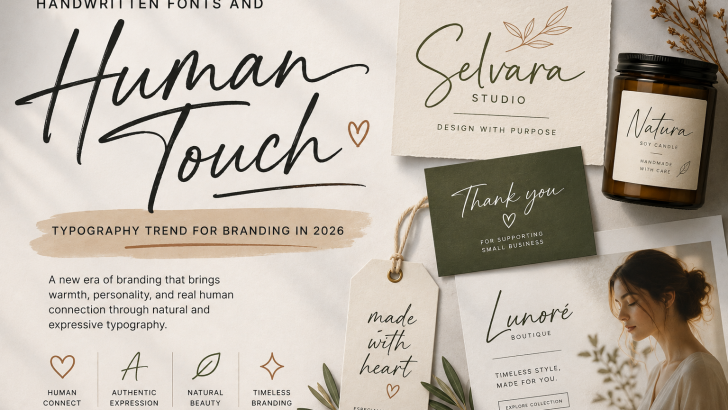
Handwritten Fonts: The Human Touch Typography Trend of 2026
Handwritten fonts are gaining renewed attention as designers and brands look for visual identities that feel more personal, natural, and emotionally engaging. After years of polished digital minimalism, typography inspired by handwriting offers a way to introduce warmth and individuality into modern design.
In 2026, the appeal of the human touch is particularly relevant. As artificial intelligence and automated creative tools become more common, brands are exploring visual elements that communicate personality, creativity, and authenticity.
From logos and packaging to social media and personal branding, handwritten typography can help create experiences that feel less corporate and more connected to real people.
What Are Handwritten Fonts?
Handwritten fonts are typefaces inspired by natural handwriting and hand lettering.
Unlike geometric typefaces built around precise shapes, handwritten styles often include subtle irregularities that reflect the natural movement of the human hand.
Common characteristics include:
- Natural stroke variations
- Organic letterforms
- Personal character
- Irregular details
- Signature-inspired forms
- Casual or expressive shapes
These characteristics can give typography a distinctive personality while helping brands create a warmer visual identity.
Why Handwritten Fonts Are Trending in 2026
Digital design tools have made it easier than ever to create polished visual content.
Templates, automated layouts, and AI-generated graphics can produce professional results quickly. However, this convenience can also lead to visual similarity.
Natural handwriting provides a contrast to highly polished digital aesthetics.
Small imperfections and expressive letterforms can make a design feel more individual and intentional. For brands looking to build emotional connections with their audiences, this human quality can become a valuable part of their visual identity.
The Return of Human Touch Typography
As more creative work is produced digitally, designers are rediscovering elements that feel personal and human.
Typography can communicate qualities such as:
- Authenticity
- Warmth
- Creativity
- Personality
- Approachability
This direction is particularly relevant for independent businesses, creative studios, lifestyle companies, and personal brands.
The goal is not to make a design intentionally imperfect. Instead, it is about finding a balance between professional design and natural personality.
Handwritten Fonts vs Script Fonts
Handwritten and script typefaces are often grouped together, but they can have different characteristics.
Handwritten Typography
Handwriting-inspired styles often imitate natural, everyday writing.
They may feel:
- Casual
- Personal
- Organic
- Friendly
- Expressive
Script Typography
Script fonts are often influenced by calligraphy and more formal lettering traditions.
They may feel:
- Elegant
- Romantic
- Luxurious
- Decorative
- Sophisticated
Both styles can work effectively depending on the personality and purpose of the project.
Best Handwritten Fonts for Logo Design
Logo design is one of the most popular applications for handwriting-inspired typography.
A handwritten wordmark can give a business a distinctive personality and create a stronger sense of individuality.
This approach works particularly well for:
- Personal brands
- Creative studios
- Beauty businesses
- Fashion boutiques
- Photographers
- Wedding businesses
- Lifestyle brands
The typography can make a logo feel more personal than a traditional corporate wordmark.
Designers can also customize individual characters, adjust spacing, or use alternative glyphs to make the final logo more distinctive.
If you’re exploring other typography styles for brand identities, our guides to Logo Fonts and Expressive Typography offer additional inspiration for creating memorable wordmarks and visual systems.
Signature Fonts for Personal Branding
Signature-style typefaces remain popular for personal branding because they can create the impression of an individual signature.
They work particularly well for:
- Photographers
- Designers
- Coaches
- Influencers
- Artists
- Creative entrepreneurs
A signature font can help connect a person’s name directly with their visual identity.
However, readability should always remain a priority. Highly decorative signatures may look beautiful at large sizes but become difficult to recognize when used as small logos or social media profile images.
Handwritten Typography in Packaging Design
Packaging is another strong application for natural lettering.
Handwriting-inspired typography can help products communicate qualities such as:
- Handmade craftsmanship
- Authenticity
- Personality
- Creativity
- Natural character
This approach can be effective for:
- Coffee
- Food products
- Cosmetics
- Candles
- Handmade goods
- Lifestyle products
Combining expressive lettering with clean typography can create a balance between personality and professionalism.
For luxury or premium packaging, designers can also combine handwritten accents with elegant serif typography. Our guide to Modern Serif Fonts explores another typography style that works particularly well for sophisticated branding and packaging.
The Handmade Aesthetic in Modern Branding
The handmade aesthetic is closely connected to handwritten typography.
Brands can use natural textures, illustrations, organic photography, and expressive lettering to create visual identities that feel less industrial.
This approach can be particularly effective for small businesses and independent creators.
However, larger brands can also use handmade elements strategically to introduce warmth into otherwise polished design systems.
The key is consistency. Typography, photography, packaging, and other visual elements should work together to communicate the same personality.
Handwritten Fonts and Social Media Design
Social media is highly visual and increasingly competitive.
Handwriting-inspired typography can help content feel more spontaneous and personal.
It can be used for:
- Quotes
- Headlines
- Personal messages
- Product launches
- Lifestyle content
- Promotional graphics
The informal nature of handwriting can fit naturally with conversational social media communication.
However, decorative typography should be used selectively. Important information should remain easy to understand, especially on smaller mobile screens.
Combining Handwritten and Serif Fonts
Handwritten typography can work beautifully when paired with serif fonts.
The handwritten style provides personality, while the serif typeface adds structure and sophistication.
This combination works particularly well for:
- Wedding branding
- Beauty products
- Editorial design
- Fashion
- Luxury packaging
The contrast between the two styles can create a balanced visual hierarchy.
For more inspiration on combining different typography styles, explore our guide to Font Pairings for Luxury Branding, where we discuss how contrasting typefaces can work together within a cohesive visual identity.
Combining Handwritten and Sans Serif Fonts
A clean sans serif font can also provide an effective contrast.
This pairing often feels modern, casual, and approachable.
Use handwriting-inspired typography for:
- Logos
- Headlines
- Accent words
- Short messages
Use the sans serif font for:
- Body text
- Product information
- Navigation
- Supporting content
This approach allows the expressive font to create personality while the sans serif maintains readability.
How to Choose Handwritten Fonts for Branding
Before selecting a handwritten typeface, consider several important factors.
Readability
Some handwriting styles can be difficult to read, especially at small sizes.
Test the font across different applications before making a final decision.
Personality
Choose a typeface that matches the emotional character of the brand.
A casual handwritten style may work for a creative lifestyle business, while an elegant signature font may be more appropriate for luxury or wedding branding.
Authenticity
Look for natural letterforms that do not feel overly repetitive.
Alternative Characters
Ligatures and stylistic alternates can help create more natural-looking words.
Language Support
Check whether the font includes the characters required for your audience and target markets.
Designers can also explore established type libraries such as Adobe Fonts and Google Fonts to study different handwriting and script styles. Comparing multiple typefaces can help you understand how letterforms, spacing, ligatures, and stylistic alternates influence personality and readability.
The Role of Ligatures and Stylistic Alternates
OpenType features can make handwriting-inspired typefaces feel more natural.
Alternative characters allow repeated letters to appear slightly different, while ligatures can create smoother or more distinctive connections between specific letter combinations.
These features help reduce the repetitive appearance that digital handwriting can sometimes have.
For font designers, carefully crafted alternates and ligatures can significantly improve the authenticity and versatility of a typeface.
Handwritten Typography in the Age of AI
As AI-generated content becomes more common, visual identity may increasingly focus on personality and differentiation.
Natural typography provides one way to introduce a sense of individuality.
Of course, using a handwritten font does not automatically make a brand authentic. Authenticity comes from the complete brand experience, including communication, products, customer service, and visual identity.
However, typography can help establish a more personal visual tone.
This human-centered direction is closely related to the ideas explored in our Humanist Fonts guide, which looks at how natural letterforms can create warmer and more approachable brand experiences.
Common Mistakes to Avoid
Handwriting-inspired typography can be powerful when used carefully.
Avoid:
- Using decorative fonts for long paragraphs
- Choosing styles that are difficult to read
- Using too many expressive typefaces
- Ignoring spacing and hierarchy
- Selecting typography that conflicts with the brand personality
These typefaces are usually most effective for logos, headlines, short phrases, and accent text rather than long-form body copy.
What This Trend Means for Font Designers
The growing interest in natural and expressive typography creates opportunities for type designers.
High-quality handwritten fonts can include:
- Stylistic alternates
- Ligatures
- Swashes
- Multilingual support
- Multiple styles
These features allow graphic designers to create more varied and natural compositions.
Font creators can also explore the space between casual handwriting, elegant signatures, brush lettering, and experimental hand-drawn typography.
The result can be a versatile typeface that maintains the personality of handmade lettering while providing the functionality expected from a professional digital font.
Final Thoughts
Handwritten fonts bring personality and human character into modern visual communication.
In 2026, their appeal is particularly relevant as brands look for ways to differentiate themselves from increasingly polished and automated digital content.
From logos and packaging to personal branding and social media, handwriting-inspired typography can help create visual identities that feel warmer, more individual, and emotionally engaging.
The most effective approach combines personality with readability. When paired thoughtfully with serif or sans serif typography, handwritten styles can become a powerful part of a distinctive and memorable brand identity.