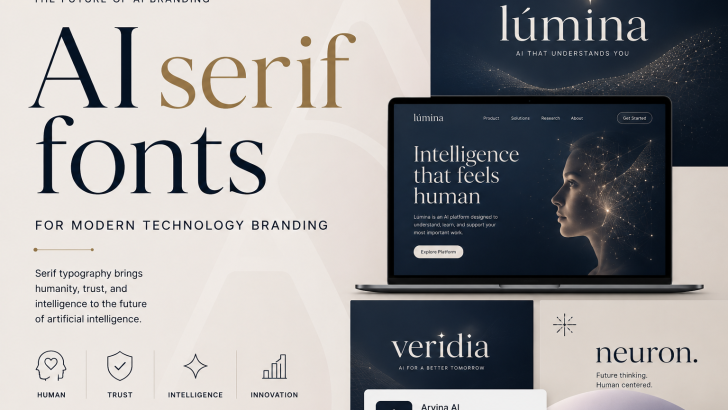
Why AI Brands Are Using Serif Fonts in 2026
For years, technology companies were dominated by clean sans serif typography. Simple geometric fonts became the visual language of startups, software companies, and digital products.
But the visual identity of technology is beginning to change.
As artificial intelligence becomes part of everyday life, some AI companies are exploring typography with more warmth, personality, and character.
One of the most interesting developments is the return of serif fonts.
In 2026, serif typography is increasingly relevant to technology branding as companies search for visual identities that feel more human, trustworthy, and distinctive.
The Changing Look of Technology Brands
Technology branding has traditionally focused on simplicity.
Clean sans serif fonts helped companies communicate:
- Innovation
- Efficiency
- Simplicity
- Modernity
- Technology
For many years, this approach worked extremely well.
However, as more technology companies adopted similar visual identities, many brands began to look increasingly alike.
Minimal logos, geometric sans serif fonts, and simple color palettes became common across the technology industry.
Today, brands are looking for new ways to differentiate themselves.
Why AI Brands Are Exploring Serif Fonts
Artificial intelligence creates a unique branding challenge.
AI products are highly advanced, but companies still need people to feel comfortable using them.
Typography can help bridge the gap between complex technology and human experience.
AI serif fonts can introduce qualities that are sometimes missing from traditional technology branding, including:
- Warmth
- Trust
- Intelligence
- Heritage
- Personality
Serif typography can make a digital product feel less mechanical and more approachable.
The Search for More Human Branding
As artificial intelligence becomes more powerful, brands are increasingly thinking about how technology feels to users.
People do not simply interact with software anymore. They communicate with AI assistants, generate creative work, search for information, and automate everyday tasks.
Because of this, AI companies need visual identities that feel comfortable and familiar.
Serif fonts can help create this emotional connection.
Their association with books, newspapers, literature, and traditional publishing gives them a sense of familiarity that contrasts with highly technical products.
Moving Away From Tech Sameness
One of the biggest challenges in modern technology branding is visual similarity.
Many startup identities use similar combinations:
- Geometric sans serif fonts
- Minimal logos
- Gradient colors
- Simple icons
- White backgrounds
While these elements are functional, they can make brands difficult to distinguish.
Using serif typography gives technology companies another way to develop a recognizable personality.
A carefully selected serif font can immediately make a brand feel different from competitors.
Serif Fonts and Trust
Trust is particularly important for AI companies.
Users want to understand how technology works and feel confident using products that may handle information, creativity, or important decisions.
Typography alone cannot create trust, but it can influence how a brand is perceived.
Serif fonts have long been associated with publishing, education, journalism, and established institutions.
When used carefully, these visual associations can help an AI brand communicate knowledge and credibility.
The Return of High-Contrast Serifs
High-contrast serif fonts are also gaining attention in contemporary branding.
These typefaces combine dramatic differences between thick and thin strokes, creating an elegant and sophisticated appearance.
They work particularly well for:
- AI startups
- Creative technology companies
- Design platforms
- Digital publications
- Premium software products
The contrast between advanced technology and classic typography can create an interesting and memorable visual identity.
AI Serif Fonts vs Sans Serif Fonts
Both serif and sans serif typography can work effectively for technology brands.
The right choice depends on brand personality.
Serif Fonts
Serif typography can communicate:
- Intelligence
- Warmth
- Authority
- Sophistication
- Human character
Sans Serif Fonts
Sans serif typography often communicates:
- Simplicity
- Speed
- Innovation
- Efficiency
- Modernity
Some brands combine both styles to create a flexible typography system.
For example, a serif font may be used for headlines and branding, while a clean sans serif font handles interface elements and longer text.
Serif and Sans Serif Font Pairing
Combining serif and sans serif typography is becoming an effective strategy for modern technology branding.
The serif typeface provides personality and emotional character.
The sans serif typeface provides clarity and functionality.
This combination works particularly well across:
- Websites
- Mobile applications
- Marketing campaigns
- Social media
- Presentations
- Product interfaces
A balanced font pairing can help a brand feel both innovative and human.
Typography as a Competitive Advantage
As AI products become more common, technology alone may not be enough to differentiate a company.
Brand identity will become increasingly important.
Typography can help businesses establish a recognizable visual voice.
A distinctive typeface used consistently across digital and physical touchpoints can strengthen brand recognition and create a more memorable experience.
How to Choose a Serif Font for an AI Brand
When choosing a serif typeface for technology branding, consider several factors.
Readability
The font should remain clear across desktop and mobile devices.
Personality
Choose typography that reflects the character of the product.
Versatility
The typeface should work across websites, presentations, advertising, and social media.
Digital Performance
Fonts used heavily online should be optimized for screen environments.
Brand Differentiation
Avoid choosing typography simply because another successful AI company uses a similar style.
The goal should be to create a unique visual identity.
The Role of Custom Typography
As technology branding becomes more competitive, custom typography may also become increasingly valuable.
Brands can customize existing typefaces or commission bespoke fonts to create more distinctive identities.
Custom letterforms can help companies develop recognizable visual assets without relying entirely on traditional logos.
Even subtle modifications to letters can give a wordmark more personality.
What This Trend Means for Font Designers
The growing relationship between AI branding and serif typography creates interesting opportunities for type designers.
Technology companies increasingly need fonts that combine:
- Digital readability
- Strong personality
- Flexible font families
- Modern aesthetics
- Human character
Modern serif families that perform well across both branding and digital environments may become particularly valuable.
Variable font technology can also provide greater flexibility by allowing designers to adjust weight, width, and other characteristics within a single font system.
The Future of AI Branding
AI branding will likely continue evolving as artificial intelligence becomes more integrated into everyday products.
The industry may move away from a single recognizable “tech aesthetic” toward more diverse visual identities.
Some companies will embrace expressive typography.
Others will explore editorial design, serif fonts, or custom type systems.
The common goal will be differentiation.
Brands will need visual identities that communicate not only technological capability but also personality and trust.
Final Thoughts
The growing interest in AI serif fonts represents a broader change in technology branding.
After years of minimalist sans serif identities, brands are beginning to rediscover typography with character, history, and warmth.
For AI companies, serif fonts offer an interesting contrast: advanced technology presented through typography that feels familiar and human.
As artificial intelligence continues to shape the digital world, typography may become one of the most important tools for helping technology brands develop distinctive and trustworthy identities.