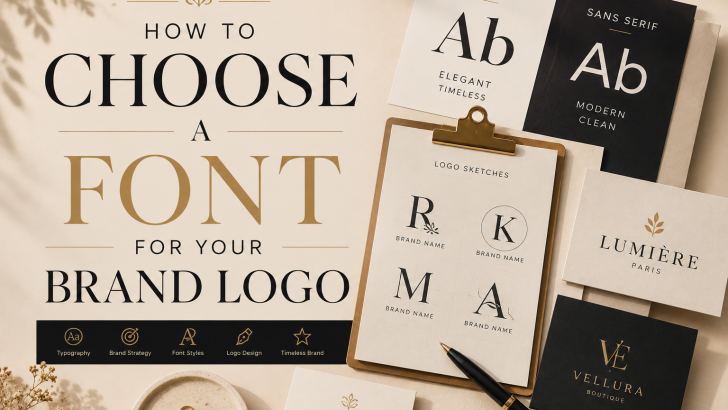
Your logo is often the first thing people notice about your brand. While colors, symbols, and layouts matter, typography can have the biggest impact on how customers perceive your business.
A well-chosen font can make your brand appear professional, trustworthy, luxurious, friendly, modern, or creative. On the other hand, the wrong font can send the wrong message and weaken your visual identity.
In this guide, you’ll learn how to choose the perfect font for your brand logo and avoid common typography mistakes.
Why Typography Matters in Logo Design
Typography is more than decoration. It communicates personality.
Before customers read your message, they subconsciously judge your brand based on visual appearance.
The right font helps your logo:
- Build trust
- Create recognition
- Differentiate from competitors
- Improve brand consistency
- Support long-term growth
Many successful brands rely on typography as their primary visual asset.
Step 1: Define Your Brand Personality
Before choosing a font, determine how you want customers to perceive your brand.
Ask yourself:
- Is your brand luxurious?
- Is it modern and innovative?
- Is it friendly and approachable?
- Is it creative and artistic?
- Is it traditional and professional?
Your answers will guide your font selection.
Step 2: Understand Different Font Categories
Serif Fonts
Serif fonts feature small decorative strokes at the ends of letters.
They often communicate:
- Luxury
- Trust
- Elegance
- Heritage
- Authority
Perfect for:
- Fashion brands
- Jewelry businesses
- Beauty products
- Premium services
Sans Serif Fonts
Sans serif fonts have clean and simple letterforms.
They often communicate:
- Modernity
- Simplicity
- Innovation
- Technology
- Accessibility
Perfect for:
- Startups
- SaaS companies
- Technology brands
- Creative agencies
Script Fonts
Script fonts mimic handwriting and offer a personal touch.
They communicate:
- Creativity
- Elegance
- Personality
- Craftsmanship
Perfect for:
- Wedding brands
- Personal brands
- Boutique businesses
Display Fonts
Display fonts are designed to attract attention.
They communicate:
- Uniqueness
- Creativity
- Strong personality
Perfect for:
- Food packaging
- Entertainment brands
- Product logos
Step 3: Know Your Audience
The best logo font is not necessarily your favorite font.
It is the font your customers respond to.
For example:
Luxury customers often prefer elegant serif typography.
Tech customers often prefer minimalist sans-serif fonts.
Creative audiences may appreciate unique display fonts.
Understanding your target audience helps you make smarter design decisions.
Step 4: Prioritize Readability
A beautiful font is useless if customers cannot read it.
Your logo should remain clear when used on:
- Business cards
- Packaging
- Websites
- Social media
- Advertisements
Always test your logo at different sizes before making a final decision.
Step 5: Avoid Trend-Chasing
Many trendy fonts look impressive today but feel outdated within a few years.
Strong brands focus on timeless typography.
Ask yourself:
Will this font still look professional five years from now?
If the answer is uncertain, keep searching.
Step 6: Consider Font Pairing
Many successful logos combine multiple type styles.
For example:
- Serif headline + Sans serif tagline
- Display font + Minimal sans serif
- Script font + Clean sans serif
Good font pairing creates hierarchy and improves readability.
Common Logo Typography Mistakes
Avoid these mistakes:
Using Too Many Fonts
Limit your logo to one or two typefaces.
Choosing Decorative Fonts
Overly decorative fonts can quickly become difficult to read.
Ignoring Scalability
A logo should work at both large and small sizes.
Following Design Trends Blindly
Focus on your brand identity rather than temporary trends.
Using Free Fonts Without Checking Licenses
Always ensure commercial licensing requirements are met.
Typography Trends for Logo Design in 2026
Several typography trends are shaping logo design this year:
Elegant Serif Revival
Luxury brands continue to embrace sophisticated serif typography.
Minimalist Wordmarks
Simple typography-focused logos remain highly effective.
Custom Letterforms
Many businesses invest in custom typography to improve uniqueness.
High-Contrast Serifs
Fashion and beauty brands increasingly adopt dramatic serif fonts.
Final Thoughts
Choosing the right font for your brand logo is one of the most important branding decisions you’ll make.
The ideal typeface should reflect your brand personality, appeal to your audience, remain readable across platforms, and stand the test of time.
When in doubt, prioritize clarity, simplicity, and consistency. A carefully selected font can transform an ordinary logo into a memorable brand identity that customers recognize and trust.